

Prefer to listen?
Tap here to play it in the Substack app
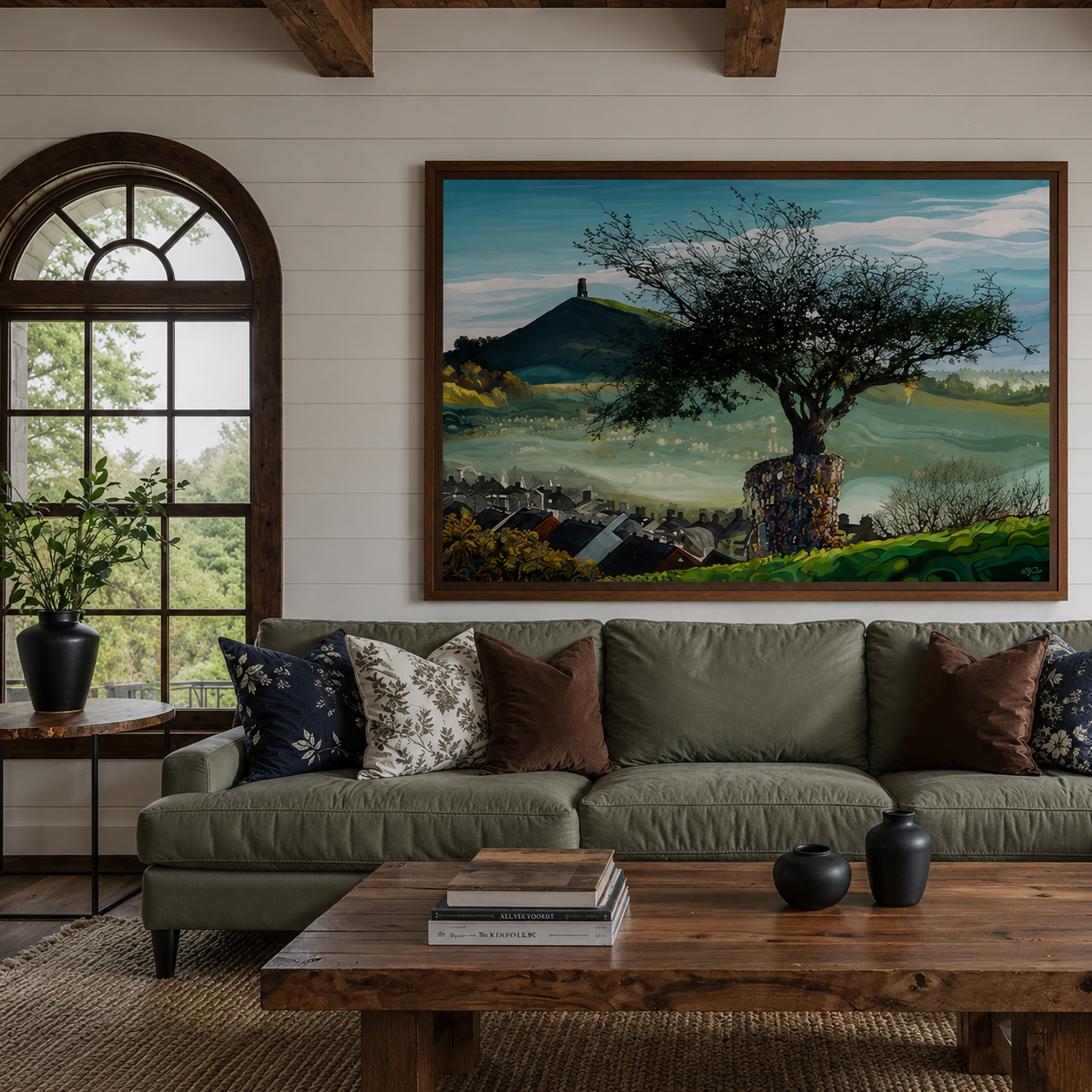
My Painting “Lost” was one of the only paintings my father ever saw.
I was in my early thirties. I hadn’t truly started painting yet, at least not in the way I think about it now. Just a few pieces here and there. A lot of half-finished drawings in sketchbooks. It felt like a quiet pastime. A hobby. Something I did between things, or on vacation, or when I was bored.
I don’t remember exactly what he said when I showed him this painting, but I could tell he liked it. He had liked the handful I had done before too, the few scattered between when I was thirteen and that point in my life. He wasn’t sick yet. But I remember that moment clearly.
It mattered to me to show him what I had made. I wanted his approval. I always did. I think no matter how old you are, that part of you stays. You want your parents to see you and to be proud.

My Father, Jim Dillon passed away on November 2nd, 2010
Not long after that, everything changed. He got sick, and it was the kind of sickness you don’t recover from. Toward the end of his life, when his world was getting smaller and mine was about to change forever, he said something to me that stayed with me. He told me that life is short, and that I should pick one thing. He was someone whose advice I always listened to. Both my parents have always had a way of giving me the right words at the right time. I didn’t know how much I needed to hear it that day, or the weight of what it would mean later.
He knew I had many interests, and that I often pulled myself in too many directions. I can’t know for sure, but I think in that moment he was reflecting on his own life—what he had done, what he would leave behind, and what he hoped I might carry forward.
He looked at me and said, “you should paint.”
I didn’t make the decision right then. At the time, I was taking in everything about him: his voice, his presence, the way he looked when he spoke. His advice became part of that moment, no different from the image of him I was trying to burn into my memory. But after he passed, painting was the only thing that made sense. It gave me a way to process the grief. It was quiet and allowed me to sit alone with my thoughts, to let time pass without meaning. I didn’t realize it then, but it gave me something to hold on to - something steady, something I could build from. It helped me create meaning and structure out of what had felt like chaos, and it became the beginning of a legacy.
I was listening to a story about an artist and his legacy of creating one hundred paintings in his lifetime. While I was painting, I thought to myself, that seems possible. So I made a promise. I would create one hundred paintings in five years. I wasn’t focused on a certain style, and I didn’t have any other goal except to finish the hundred. I broke it down and figured that twenty paintings a year seemed doable, especially since most of my paintings at the time were fairly small.
But it wasn’t as easy as I had imagined. The painting itself wasn’t the hard part, it was finding the time. I had a full-time job and a busy life, but I didn’t really feel like doing anything else. I needed the time, and I was willing to make space for it. So I committed to a daily practice at night. It felt like the only way it could happen: two to three hours a day, every day, no matter what. I started painting in my bedroom and often worked late into the night past midnight.
In the beginning, it was about mourning. I just needed the space, and painting gave me that. It was something about the action itself, the quiet rhythm of mixing the paint, putting it onto canvas, and watching what it did. It felt meditative. It had nothing to do with discipline at first, but the discipline was already in place. Over time, it began to shift. Slowly, painting became something else.
I had always been interested in art, but what was happening during those quiet hours was something different. I was becoming an artist. Someone willing to dedicate their life to a single practice.
When I painted Lost, I didn’t know it would be the last painting he would ever see. And I didn’t have a moment where I suddenly felt like an artist. It wasn’t one painting that did that. It came later, when I looked back at everything I had created and realized something had changed. Something had taken shape through the work itself.
Since then, I have painted nearly three hundred paintings. He never saw any of them. All of the growth, the shows, the milestones, the new studio space, the recognition, and the small moments that have meant everything to me. He missed all of it.
But my mother has been here through it all. Her encouragement has been steady and real. She tells me when a painting moves her. She shows up at my art exhibits. She shares my work with people online, and she never lets me forget how proud she is. She has also purchased some of my paintings and proudly displays them in her home. As her son, there’s something deeply meaningful about that. It’s quiet, personal, and says more than words ever could.
That kind of support is hard to describe, but it has shaped everything. I would not be here without her.


Lost hangs in my new studio. It is not my best work, but it is one of the most important. It was a step and one of most important steps. It reminds me of the beginning. Of a time when none of this felt possible. Of my father saying said, “you should paint.” And of a promise still held today that still lives in everything I paint.
We were very close, and we were good friends.
I wish he could see what came next.
I wish we had more time.
But I’m grateful for the time we had.
And a part of me believes he knows.
Thank you, Dad.
Thank you, Mom.
I love you both.
— Jeff