

Prefer to listen?
Tap here to play it in the Substack app
People often ask me whether art should be thought of as an investment. Usually they mean financially, but I do not think that is the whole question. More often, what they are really asking is whether the piece they are drawn to now will still feel right years later, after the excitement of buying it has passed and the work has become part of their everyday life.
That is where art becomes different from most things we buy.
A painting is not something you use up or replace quickly. You live around it. You pass it in the morning, catch it from another room, and notice it differently depending on the light, the season, your mood, or whatever is happening in your life at the time. Some days it may sit quietly in the background. Other days it may stop you for a moment without warning.
That is what makes the idea of investing in art more complicated than asking whether a painting may increase in price. There can be financial value, of course, but that is not the only return. The value also comes from how the work changes a room, how it settles into a home, and how it becomes part of the way someone lives.
For collectors, especially those buying original paintings or limited edition prints from a living Canadian artist, there is usually a balance between instinct and thoughtfulness. The first response matters. So does the connection. But it also helps to slow down and ask whether the work has enough presence to stay with you over time.
As a Canadian artist working in contemporary landscape painting, I think about this often. A strong piece of art does not only fill a wall. It brings something into the room. It can carry a sense of place, memory, movement, weather, light, or stillness.
I have seen collections built quickly, sometimes because of momentum, trends, or outside approval. I have also seen collections built slowly, one piece at a time, where each work seems to have earned its place. Those slower collections often hold up better. Not just visually or financially, but emotionally. The pieces stay on the wall longer because they continue to feel relevant as life changes around them.
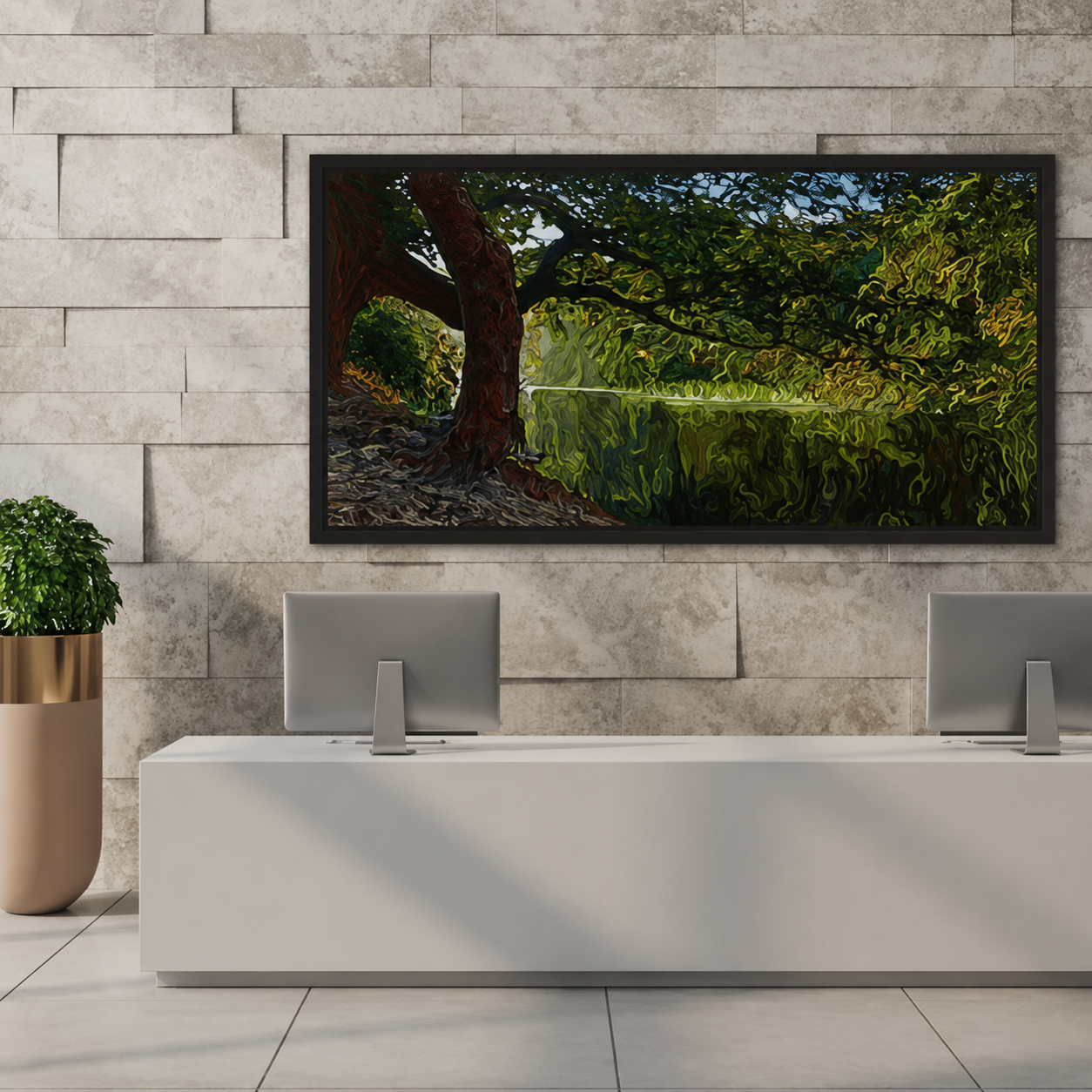
#264 – Guiding Light by Jeff Dillon

Art That Stays With You
One of the most important parts of collecting art is learning the difference between being impressed by a piece and wanting to live with it. A painting can be technically strong, visually striking, or popular with others, and still not be the right piece for your home. That does not make it unsuccessful. It simply means the relationship is not there.
Art has a way of revealing things, sometimes gently and sometimes uncomfortably. The pieces we bring into our homes say something about what we value, what we are drawn to, and what kind of presence we are willing to live with over time. When considering an original painting, it helps to think beyond how it looks in one moment. Ask what kind of feeling it brings into the room. Does it settle the space, add movement, create quiet, hold tension, or invite reflection. Does it feel like something you will want to return to, not just something that catches your eye once.
This matters because art is not static once it enters a home. It changes as the room changes. It changes with the light. It changes with the person looking at it. A painting that feels bold in one season may feel grounding in another. A quiet work may become more powerful over time because it does not demand attention all at once.
Not every meaningful response to art is immediate. Some works take time. Others feel right instantly, but do not last. That difference matters more than many people expect. The pieces that endure are often the ones that continue to offer something once the novelty wears off.
This is one reason I think living with art is so different from simply owning art. Ownership can be a transaction. Living with the work is a relationship.

Buying from a living artist
Buying artwork from a living artist adds another layer to the experience. You are not only purchasing an object. You are supporting an active practice, a body of work, and a person who is still making, changing, developing, and putting work into the world.
That does not mean every purchase has to feel emotional or overly serious. Sometimes a piece simply feels right. It may remind someone of a place, a season, a memory, or a feeling they want to keep close. In many cases, that personal response is what gives the work its staying power.
For me, as a Canadian artist working mostly in contemporary landscape painting, I often hear from collectors who respond first to a sense of place or atmosphere. They may not know exactly why a painting pulls them in at first. It might be the movement in the sky, the strength of a tree, the memory of a lake, or the feeling of weather passing through a landscape. Over time, that first response becomes clearer.
That is one of the quiet rewards of collecting art. You learn your own eye.
You begin to understand what you return to. You notice whether you are drawn to colour, structure, movement, calm, tension, story, or a certain kind of light. A collection becomes a record of those choices. It does not need to be perfect. It needs to be honest.
The financial side of investing in art
It would be unrealistic to say the financial side of art does not matter. Original paintings can be meaningful purchases, and collectors should feel good about what they are bringing into their home.
At the same time, art is not the same as a stock, bond, or guaranteed financial instrument. This is not financial advice, and I do not think artwork should be reduced to that kind of thinking. The art market can be unpredictable. Tastes shift. Artists’ careers develop in different ways. Some works may increase in value, while others may not.
That is why I still believe the strongest reason to buy a piece of art is because you want to live with it.
The financial value may matter. The artist’s career may matter. Edition size, materials, provenance, condition, and documentation may matter. With original paintings and limited edition prints, those details help support the long-term integrity of the work. But they should support the decision, not replace the connection.
A painting that has meaning in your life already carries value. It changes the room. It changes the way you experience your home. It can become part of family conversations, daily routines, and personal memory. That kind of value is difficult to measure, but it is not small.

#302 – Between the Peaks – Original Painting
Living with artwork over time
One of the interesting things about collecting art is that your relationship with a piece can change over time.
A painting that felt bold when you bought it may eventually feel calm. A piece that once seemed quiet may become the one you notice most. A work that belonged in one room may suddenly make more sense somewhere else.
That is not a problem. It is part of living with art.
Artwork is not frozen in the moment you acquire it. It continues to exist alongside your life. It is there through moves, renovations, changing seasons, celebrations, losses, ordinary days, and all the small shifts that happen in a home over time. Eventually, it begins to carry some of that personal history with it.
That is why I think collectors should give artwork time. Do not judge a piece only by the first week it is on the wall. Let it settle. Let the room adjust around it. Let yourself see it at different times of day. Some pieces reveal themselves slowly, and that slow unfolding can be part of their strength.
At the same time, not every piece has to stay in the same place forever. Sometimes moving a painting to another room allows you to see it again. Sometimes placing it near different furniture, lighting, or surrounding artwork changes the whole feeling. A collection should have room to breathe.
Making room for what comes next
Relationships with artwork change. A piece that once felt essential may no longer fit your space, your life, or the direction your collection is moving in. That does not diminish its value, and it does not mean the original decision was wrong. It simply reflects growth.
For many collectors, making room is not about loss. It is about clarity.
Wall space is limited. So is attention. When every wall is full, even meaningful pieces can begin to compete with each other. Creating space allows certain works to be seen more clearly, rather than getting lost in visual noise.
Sometimes that means moving a piece to another room. Sometimes it means passing it on within a family. Sometimes it means letting it leave your home entirely. What matters is that the decision is thoughtful, not reactive.
Art carries meaning because it has been lived with, not because it has been held onto indefinitely.
Making room does not erase what came before. It creates continuity. It acknowledges that collecting is not static. A living collection should be allowed to evolve alongside the person who lives with it.

#303 – Langiro: The Echo Remains – Original Painting
Collecting original art with intention
Whether you are buying your first piece of art or refining a long-standing collection, intention is what lasts.
Collecting with intention does not mean overthinking every decision. It means paying attention to what stays with you after the first impression has passed. It means learning about the artist, the materials, the process, and the larger body of work. Most of all, it means asking whether the piece belongs in your life, not just whether it looks good in a photograph.
For some collectors, that may mean choosing one original painting that becomes central to a room. For others, it may mean building a collection slowly through limited edition prints, smaller works, or pieces connected by subject, colour, place, or feeling. There is no single correct way to collect.
The best collections feel personal. They do not look like they were assembled to follow a trend. They carry evidence of attention, memory, and choice.
That is where the real investment begins.
Art is not valuable only because it might increase in price. Its deeper value shows up over time, in how it lives with you, challenges you, steadies you, and remains present as your life changes. That kind of investment rarely fits neatly on a spreadsheet, but it often holds up in real life.
Thank you for reading,
~ Jeff