

Prefer to listen?
Tap here to play it in the Substack app
Quick Art Size Guide
If you are trying to decide what size painting or print will look right in your room, these guidelines can help you choose a starting point before you measure more carefully.
Above furniture: choose artwork about two-thirds to three-quarters of the furniture width.
On an empty wall: choose artwork about 60% to 75% of the open wall width.
Hanging art on an empty wall: hang the centre of the artwork around eye level, usually about 57 to 60 inches from the floor.
Above a bed or sofa: leave about 6 to 10 inches between the furniture and the bottom of the artwork.
For hallways or narrow spaces: smaller or vertical artwork often works better because the viewer is closer to the wall.
For large rooms or feature walls: one larger painting or print often feels calmer and more intentional than several smaller pieces.
Before buying: use painter's tape or a wall visualizer to test the size in your own room.
The details below go into each of these situations more fully, but these guidelines will give you a strong starting point.
________________________________________________________
One of the questions I am asked most often is what size artwork someone should choose for their room.

A large painting can anchor a room, create a clear focal point, and help the whole space feel more intentional. Painting #122 “The Watcher” by Jeff Dillon Fine Art
Sometimes a collector is deciding between two sizes of the same limited edition print. Sometimes they are considering an original painting and trying to picture it above a sofa, bed, fireplace, or office desk. Other times they already know they love the piece, but they are not sure if it will feel too small, too large, or just right once it is actually on the wall.
It is a good question, because size changes everything.
A painting or print can look beautiful on its own and still feel wrong in a room if the scale is off. A piece that is too small can make a wall feel unfinished. A piece that is too large can overpower the furniture or the space around it. But when the size is right, the artwork feels like it belongs there. It settles into the room. It gives the wall purpose. It makes the space feel more complete.
I do not think choosing art should feel like solving a math problem, but measurements do help. They give you a starting point. The rest comes down to the room, the furniture, the light, and the feeling you want the artwork to bring into the space.

Painting: #300 “Isle Of Avalon” by Jeff Dillon Fine Art
Start With the Room, Not Only the Artwork
Before choosing a painting or print, I usually suggest looking at the room first. Not in a complicated way. Just stand back and look at the wall where the artwork will go.
How wide is the wall? Is there furniture underneath it? Is the ceiling low or high? Is the space narrow, open, formal, relaxed, bright, dark, simple, or already visually busy? A piece of art does not live by itself once it enters a home. It becomes part of everything around it.
That is why the same size can feel completely different from one room to another. A 24 x 24 inch painting might feel generous in a hallway or reading corner, but too small over a large sofa. A 40 x 60 inch painting or print might feel right over a console table in an open room, but too strong for a small bedroom.
There is no single perfect size for every wall. The right size is the one that feels connected to the space around it.
 Painting #280 “Moonlit Tide” by Jeff Dillon Fine Art
Choosing Art Above Furniture
If you are hanging art above a sofa, bed, console table, sideboard, fireplace, dresser, or desk, the furniture width is usually the easiest place to begin.
A good starting point is to choose artwork that is about two-thirds to three-quarters of the width of the furniture below it. This usually creates a comfortable relationship between the artwork and the furniture. The piece feels connected to what is underneath it instead of floating by itself on the wall.
For example, if your sofa is 84 inches wide, artwork somewhere around 56 to 63 inches wide will often feel balanced.
A simple way to work it out:
Furniture width x 0.67 = a good minimum artwork width
Furniture width x 0.75 = a good maximum artwork width
For an 84 inch sofa:
84 x 0.67 = about 56 inches
84 x 0.75 = about 63 inches
That does not mean the artwork has to be exactly 56 or 63 inches wide. It just gives you a useful range. A 60 inch wide painting or print would likely feel natural above that sofa.
There are exceptions, especially with sectionals, asymmetrical furniture, windows, plants, or open wall space beside the furniture. In those cases, it may make more sense to measure the main seating area or the visual centre of the furniture arrangement rather than the full outside width. If the artwork is much smaller than the furniture, it can look disconnected. If it is much wider than the furniture, it can start to feel heavy or crowded. There is always room for judgment, but the artwork and furniture should feel like they belong to the same arrangement.

Painting #291 “Everlasting Bond” by Jeff Dillon Fine Art
How High Should Art Hang Above Furniture?
The size of the artwork matters, but height matters too. I often see artwork hung too high, especially above sofas and beds. When that happens, the piece can feel separated from the furniture instead of connected to it.
In many homes, leaving about 6 to 10 inches between the top of the furniture and the bottom of the artwork works well. It gives the artwork enough breathing room without making it feel like it is floating away. This is not a strict rule. A tall headboard, a low sofa, high ceilings, or a very large piece of art can change what feels right. But as a starting point, that 6 to 10 inch space is useful.
The best test is simple. Stand back and look at the furniture and the artwork together. If they feel connected, you are probably close. If the artwork feels like it belongs to a different part of the wall, it may be too high.
Choosing Art for an Empty Wall
An empty wall can be harder to judge because there is no furniture underneath the artwork to guide the size. In that case, the wall itself becomes the reference point.
When there is no furniture underneath the artwork, height becomes especially important. A good starting point is to hang the centre of the artwork around eye level, usually about 57 to 60 inches from the floor. If the wall is very tall, the ceiling is high, or the artwork is quite large, that height can shift slightly, but centre height is usually the safest place to begin on an empty wall.
For a large empty wall, artwork usually needs enough presence to hold the space. A small piece can work if the empty space around it feels intentional, but more often, a small piece on a large wall ends up looking lonely. A useful guideline is to choose artwork that covers about 60% to 75% of the available wall width. For example, if the open wall space is 100 inches wide, artwork around 60 to 75 inches wide will often feel strong enough for the wall.
For an empty wall:
Wall width x 0.60 = a good minimum artwork width
Wall width x 0.75 = a good maximum artwork width
This works especially well in living rooms, dining rooms, offices, and entryways where the wall needs a clear focal point. The artwork does not always need to fill the wall, and some rooms are better with restraint. But if the piece is too small, the wall may still feel unfinished, even if the artwork itself is strong.
 Large artwork can often feel calmer than several smaller pieces, especially when the wall has enough space to hold it. Painting #302 – “Between the Peaks” by Jeff Dillon
Larger Art Often Feels Calmer Than Expected
A lot of people worry about going too large. I understand that. A larger painting or print feels like a bigger decision, especially when it is going into an important room in the home. But in many spaces, larger artwork actually feels calmer than several smaller pieces. One strong painting or print can anchor a wall, connect the colours in the room, and give the eye somewhere to rest. It can make the space feel more settled.
This is often true above sofas, beds, dining room sideboards, fireplaces, and office walls. If the wall is large and the furniture has weight, a larger piece often feels more natural than people expect.
Smaller artwork can be beautiful, but it needs the right setting. It can work very well in a hallway, reading corner, powder room, shelf arrangement, narrow wall, or as part of a gallery wall. On a large open wall, though, a small piece may need support from other artwork or surrounding objects. If you are choosing between two sizes and both could work, the slightly larger one is often the better choice. Not always, but often. Most people underestimate how much visual space a wall can handle.
When One Large Piece Works Best
One large painting or print often works best when you want a room to feel calm, finished, and visually grounded. It gives the wall one clear point of focus and lets the artwork set the mood.
This can work especially well:
Above a sofa
Above a bed
Above a fireplace
In a dining room
In an office
On a large entryway wall
On a feature wall where you want one strong focal point
For my own work, this is often where larger landscape paintings or larger limited edition prints are most effective. A landscape can bring atmosphere into a room without feeling too busy. It can add colour, movement, light, and a sense of space.
One large piece also gives the viewer time to stay with the work. The eye is not jumping between several different pieces. The painting has room to breathe.
 A grouped arrangement of Jeff Dillon landscape paintings can help smaller works hold a larger wall while still feeling connected to the furniture below.
When a Pair or Grouping Works Better
Sometimes one piece is not the right answer. A pair, triptych, or grouping can work beautifully when the wall is wide, the furniture is long, or the room already has a more collected feeling.
The important thing is to treat the full grouping as one artwork. If you are hanging two or three pieces above a sofa, the full width of the arrangement should usually be about two-thirds to three-quarters of the sofa width. Measure from the outside edge of the first piece to the outside edge of the last piece, including the spaces between them.
Spacing matters. If the pieces are too far apart, they can feel disconnected. If they are too close, they can feel crowded. A gap of about 2 to 5 inches between pieces often works well, depending on the size of the artwork and the room. A grouping should feel like one decision, not several separate pieces competing with each other.
Choosing Art for a Bedroom
Bedrooms usually need a slightly different approach than living rooms. The artwork often works best when it feels restful, personal, or atmospheric. It does not always need to be quiet, but it should feel connected to the mood of the room.
Above a bed, the same two-thirds to three-quarters guideline is useful. If the bed is 60 inches wide, artwork around 40 to 45 inches wide will often feel balanced. For a king bed, you may need something larger, or a pair of works that feel connected. Height is also important in a bedroom. The artwork should not feel like it is pressing down on the bed, but it should not be hung so high that it feels separate from the furniture. A calm amount of space between the headboard and the artwork usually works best.
If the bedroom already has patterned bedding, strong furniture, or dramatic lighting, a quieter piece may be better. If the room is simple, a larger or more colourful painting or print can bring life into the space.
 A vertical landscape painting can work beautifully in a narrow entryway, stairwell, or hallway where the wall has height but limited width. Painting #278 “Against The Wind” by Jeff Dillon Fine Art
Choosing Art for a Hallway or Narrow Space
Hallways, stair landings, and narrow entryways are easy to overlook, but they can be wonderful places for art. Because these spaces are usually tighter, you often do not need very large artwork. Smaller or medium-sized pieces can work well because the viewer is standing closer to the wall.
A piece that feels modest in a living room may feel just right in a hallway or entryway.
Vertical artwork can be especially useful in narrow areas. It can draw the eye upward and make the space feel more considered, especially on a tall wall near a staircase or console table. A series of smaller works can also create rhythm as someone moves through a hallway.
The key is not to overcrowd it. Narrow spaces need some breathing room. If every section of wall is filled, the art can start to lose its impact.
Choosing Art for an Office
An office can handle artwork in a few different ways. If the art is behind a desk, it may become part of the room's professional presence, especially if you are often on video calls. In that case, a larger, calm, confident piece can work well.
If the artwork is something you see while working, the feeling matters even more. Some people want energy and colour. Others want quiet and focus. The right size depends on the wall, but the right mood depends on what you need from the room. A good office painting does not need to shout. It should give the space character without constantly pulling your attention away. For a home office, I usually think the artwork should add presence without becoming distracting.

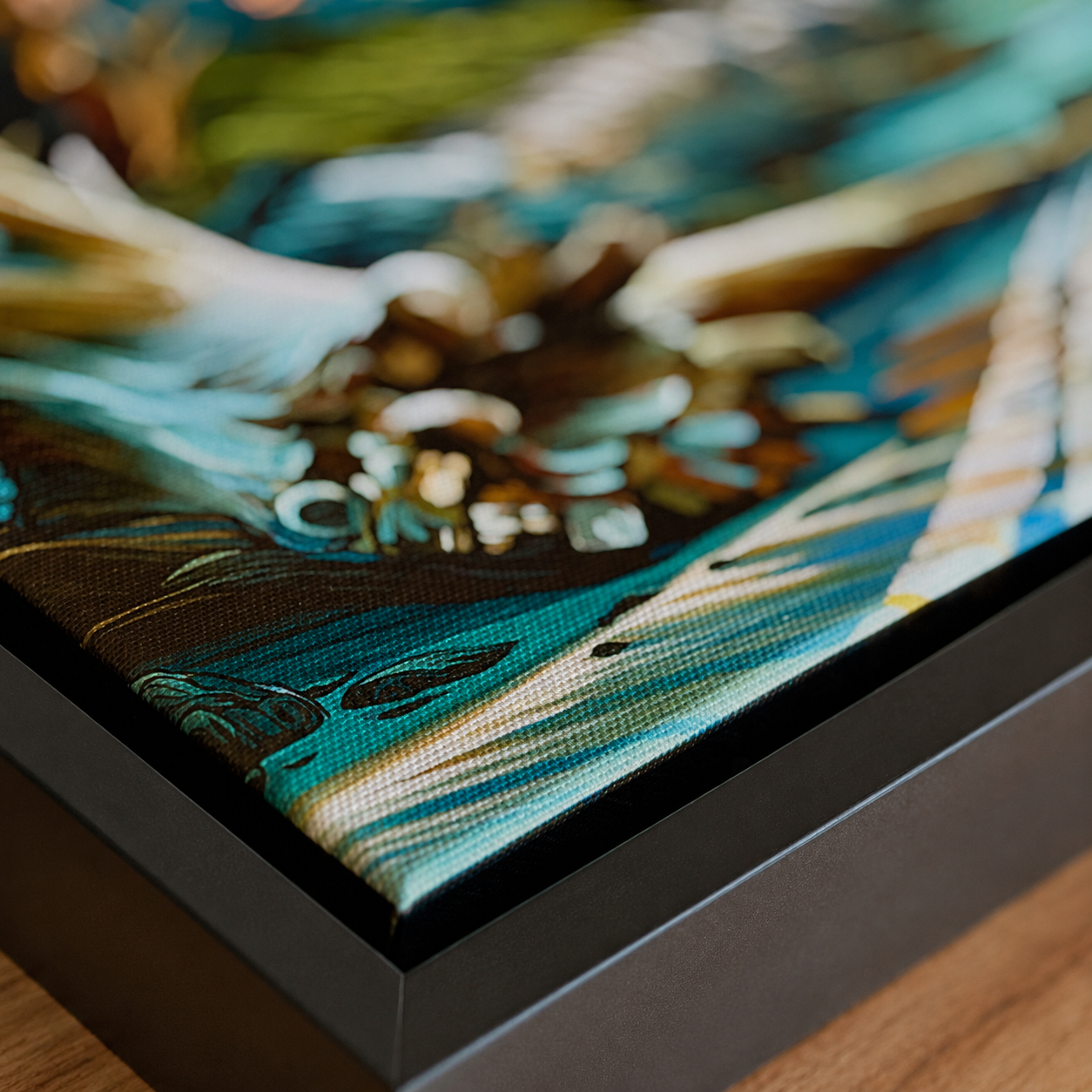
The float frame changes the final outside size of the artwork, so it is important to measure the full finished piece, not only the image size.
Do Not Forget the Frame
If your artwork is framed, remember that the final outside dimensions will be larger than the artwork itself. A 30 x 40 inch print in a frame may end up several inches larger overall, depending on the frame and whether there is matting. A canvas in a floater frame will also have a slightly larger final footprint.
When measuring your wall, think about the finished outside size, not only the image size. This matters above furniture, in narrow spaces, or anywhere the artwork needs to fit between lamps, windows, shelves, or architectural details.
A Simple Art Size Guide
These sizes are not rules, but they can help you begin thinking about scale.
Small walls or narrow spaces: 12 x 12, 12 x 16, 16 x 20, or 18 x 24
Hallways, offices, bedrooms, and smaller walls: 20 x 24, 24 x 24, 24 x 30, or 24 x 36
Above a console, dresser, or smaller sofa: 30 x 40, 36 x 36, or 36 x 48
Above a sofa, bed, dining room sideboard, or large wall: 40 x 60, 48 x 60, 48 x 72, or a grouping of pieces
Large feature walls: 60 inches wide or larger, depending on the room
The right size still depends on the actual wall, the furniture, the ceiling height, and the feeling you want the room to have. A guide can help, but the room always has the final say.
The Basic Formula
If you want the simplest version, start here:
For art above furniture, choose artwork about two-thirds to three-quarters of the furniture width.
For art on an empty wall, choose artwork about 60% to 75% of the available wall width.
For gallery walls or groupings, treat the full arrangement as one artwork and size it in relation to the furniture or wall.
For framed art, measure the outside frame size, not only the image size.
These numbers are not rules you have to obey. They are starting points that help you avoid choosing something that feels too small, too large, or disconnected from the room.
The Best Test Before Buying
Before choosing a final size, I always recommend testing the dimensions on the wall. Use painter's tape to mark out the size of the artwork. Step back and look at it from different places in the room. Sit on the sofa. Stand in the doorway. Look at it in the morning and again in the evening.
This simple step can save a lot of uncertainty. You may realize that the size you imagined is too small. That happens often. You may also realize that a larger piece feels more natural than expected because it gives the room a stronger anchor. If you are choosing artwork online, this step becomes even more useful. Measurements can feel abstract on a screen. Seeing the actual outline on your wall makes the decision much clearer.

Choosing Artwork From Jeff Dillon Fine Art
If you are choosing one of my original paintings or limited edition prints for your own space, the same ideas apply. Start with the wall. Measure the furniture. Think about the room's mood. Then look at the artwork and ask whether it has enough scale to hold the space.
Some paintings bring quiet. Some bring movement. Some bring colour, weather, light, or a stronger sense of presence. Size helps the artwork do what it is meant to do in the room. For larger walls, a single landscape painting or print can create a strong focus without making the space feel too busy. For smaller rooms, a more modest size can feel intimate and personal. In some homes, a grouping of works may be the better choice.
If you are unsure, using a visualizer or See It on Your Wall tool can help you picture the artwork in your own space before making a final decision.

Choosing the right size art is not about guessing, but it is not about following measurements blindly either. The formulas help give you a strong starting point, especially when you are placing artwork above furniture or on a large empty wall. From there, the room still has to be considered. The artwork should relate to the furniture, the wall, the light, and the way you actually live in the space.
A well-sized painting or print can change a room quickly. It can bring colour, atmosphere, memory, and presence into a space. It can make a wall feel finished and a home feel more personal.
That is why size matters. Not because there is one perfect measurement for every room, but because the right scale allows the artwork to feel settled, intentional, and properly seen.
Thank you for reading,
Jeff