

Prefer to listen?
Tap here to play it in the Substack app
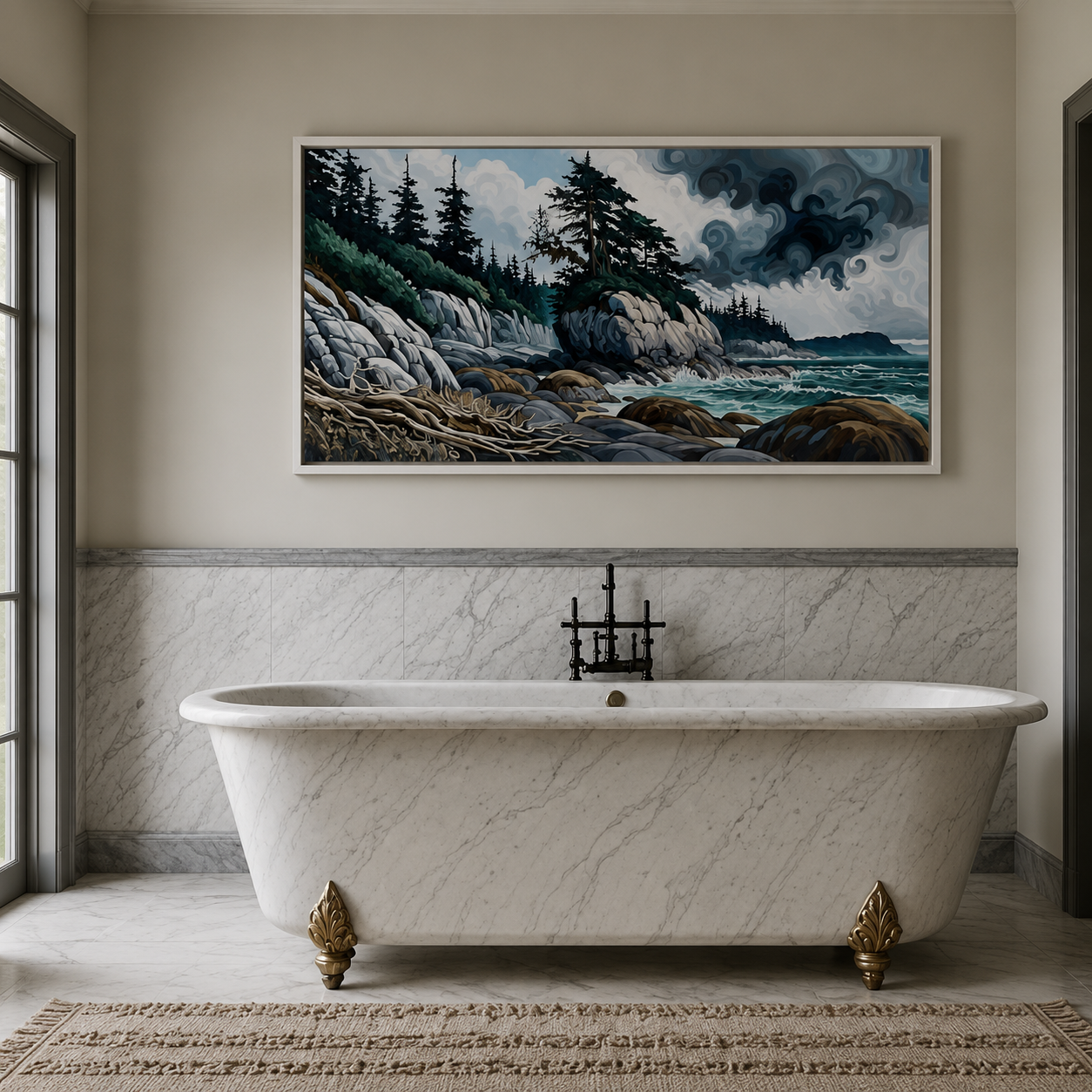
Bringing a new piece of art into your home usually creates a moment of pause. Not because something is wrong, but because the space has changed. A painting doesn’t just fill a wall. It introduces another presence into the room, and everything else has to renegotiate its place around it.
This is often where people feel uncertain. The art itself feels right, but the room feels slightly off. That tension isn’t a failure of placement. It’s the early stage of a relationship forming between the work and the space it’s entering.
Some pieces immediately declare themselves. They draw the eye the moment you enter a room and naturally become the visual anchor. These are often works with strong contrast, scale, or subject matter that carries weight. When this happens, the room tends to organize itself around the art rather than the art being adjusted to suit the room.

Other works operate differently. They don’t announce themselves right away. Instead, they reveal themselves over time, catching your attention in passing or changing character as the light shifts. These pieces often feel quieter, but they can be just as important. They shape how a space feels rather than how it looks at first glance.
Light is usually the deciding factor in whether a piece settles or struggles. A painting that feels flat under artificial light can come alive with natural daylight. Conversely, a work that feels energetic during the day may feel too active in the evening. This isn’t theoretical. It’s something you notice while living with the work, often days or weeks after it’s been hung.

Balance in a room becomes clearer once the art has been lived with for a while. If a space feels visually busy, it’s often because too many elements are competing for attention. Art doesn’t need to win that competition. It needs space to be seen clearly. Sometimes that means letting one work stand alone. Other times it means allowing distance between pieces so each one has its own presence.
Negative space plays a practical role here. Empty wall space isn’t wasted space. It allows the eye to rest and gives artwork clarity. When balance is right, the room stops asking for adjustment. You feel it immediately.

Living with art also means accepting that placement isn’t permanent. A piece that never quite settles in one room may feel completely resolved in another. This happens more often than people expect. Moving a painting isn’t a mistake. It’s part of understanding how it wants to live with you and how your space actually functions day to day.
These small shifts tend to sharpen a collector’s eye. You start noticing how scale affects mood, how colour interacts with light, and how certain works feel better in spaces where you spend more time rather than where guests will see them first.

Incorporating art into your home isn’t about achieving a finished look. Homes change. Light changes. Life changes. Art that lasts is art that can adapt to those shifts without losing its presence.
When art is allowed to lead, rather than simply fill a space, it becomes part of how a home works emotionally. It influences where you pause, where you look, and how a room feels when you return to it at the end of the day. That’s when art stops feeling like something you placed on a wall and starts feeling like something you live with.
Thank you for reading ☺
~Jeff