

Qu'est-ce qu'une impression giclée ? Comprendre mes tirages d'art en édition limitée
On me pose souvent la question : qu'est-ce qu'une impression giclée exactement ?
Tout d'abord, elle se prononce « zhee-clay ». Vous pouvez également la voir écrite sans accent, surtout dans les résultats de recherche ou les descriptions de produits. Le mot vient du verbe français « gicler », ce qui fait référence à la manière dont l'encre est projetée sur le papier ou la toile via un processus d'impression jet d'encre professionnel.
En termes simples, une impression giclée est une reproduction d'art de haute qualité réalisée avec un équipement d'impression professionnel, des encres pigmentaires d'archives et du papier ou de la toile d'art. Elle se distingue d'une affiche standard ou d'une impression d'art basique car l'objectif n'est pas seulement de reproduire une image. L'objectif est de préserver la couleur, les détails, le contraste et la sensation de l'œuvre d'art originale le plus fidèlement possible.
Mais le mot lui-même ne raconte pas toute l'histoire.
Une impression peut être qualifiée de giclée et varier considérablement en qualité. Le matériau, la capture d'image, l'imprimante, l'encre, le papier ou la toile, l'harmonisation des couleurs et le soin apporté à l'édition sont tous importants. J'ai donc voulu expliquer ce que le mot signifie, d'où il vient et ce qu'il signifie lorsque je l'utilise pour mes propres tirages en édition limitée.
D'où vient le mot giclée
Le terme giclée a commencé à être utilisé au début des années 1990, lorsque les artistes et les imprimeurs cherchaient une meilleure façon de décrire les impressions d'art numérique de haute qualité. À cette époque, l'impression jet d'encre était souvent associée à l'épreuvage commercial ou au travail de reproduction ordinaire. Le mot a aidé à distinguer l'impression d'art sérieuse de l'impression commerciale courante.
L'idée originale n'était pas simplement qu'une image avait été imprimée numériquement. C'était que l'impression était produite avec soin, une précision des couleurs et des matériaux adaptés à l'art.
Au fil du temps, giclée est devenu le mot que de nombreux artistes, galeries et ateliers d'impression professionnels utilisaient pour les reproductions d'art d'archives réalisées avec des imprimantes jet d'encre grand format. Cette histoire explique en partie pourquoi le mot véhicule toujours une notion de qualité. C'est aussi pourquoi le mot peut être déroutant. Une fois qu'un terme devient largement utilisé, il commence à être appliqué à de nombreux niveaux d'impression différents.
Alors, quand quelqu'un me demande ce qu'est une impression giclée, je pense généralement qu'il y a deux réponses. Il y a la réponse technique, puis il y a la réponse plus importante : quelles sont les normes réellement appliquées à l'impression ?
Pourquoi le mot peut être déroutant
Giclée sonne officiel. Il a une qualité artistique juste comme un mot. Mais toutes les impressions décrites de cette façon ne sont pas faites avec les mêmes matériaux ou le même soin.

La qualité dépend de plusieurs éléments agissant de concert. L'œuvre d'art originale doit être capturée correctement. Le fichier d'impression doit conserver la couleur et les détails de la peinture. Les encres doivent être des encres pigmentaires d'archives. Le papier ou la toile doit être choisi avec soin. L'équipement doit être calibré. L'impression finale doit être vérifiée par rapport à l'intention de l'œuvre originale. Si l'une de ces étapes est traitée avec désinvolture, l'impression finale le montrera.
Avec mes tableaux, cela compte beaucoup.
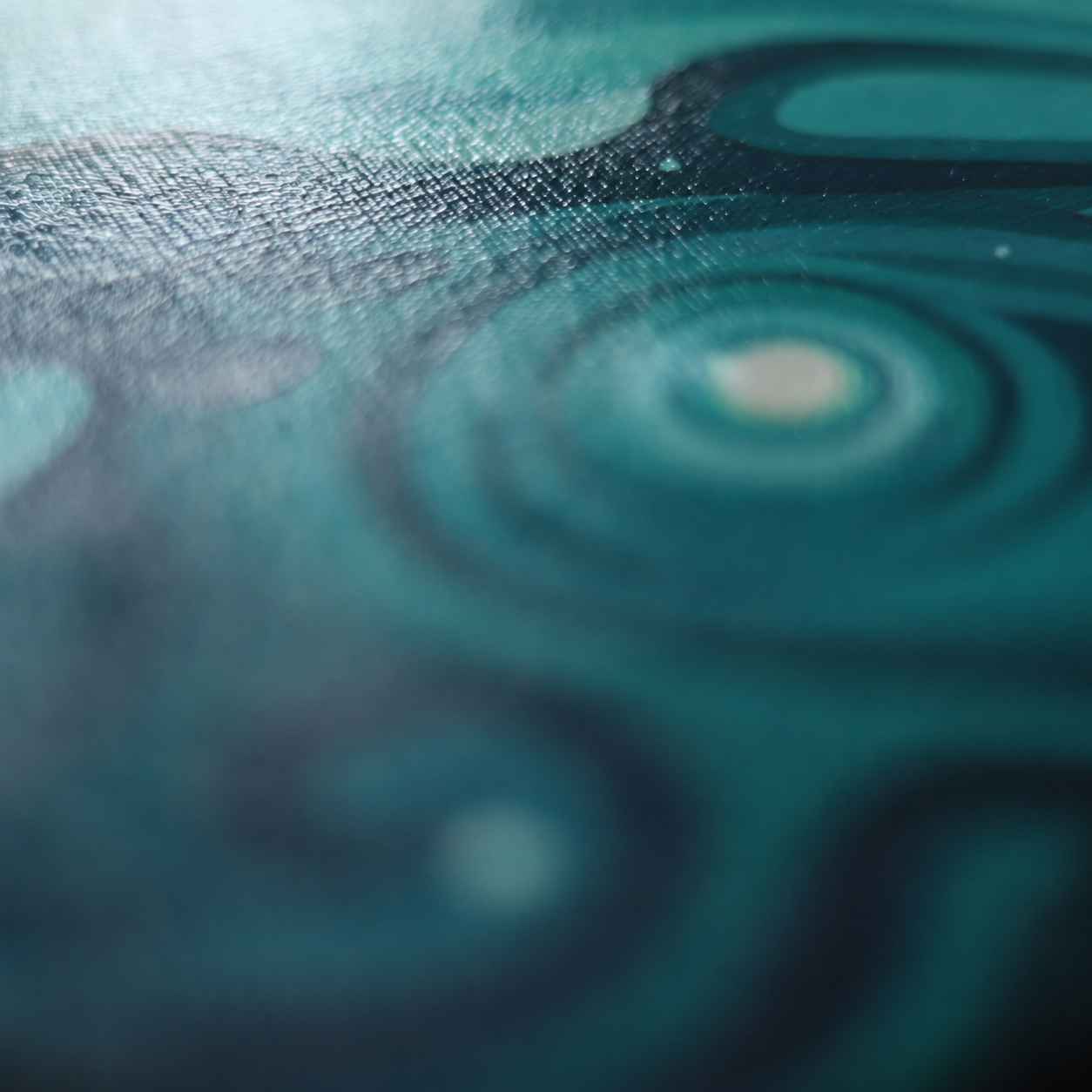
Mon travail dépend fortement de la couleur, du contraste, du mouvement, du travail de pinceau en couches et de la façon dont la lumière traverse une scène. Il ne suffit pas qu'une reproduction montre simplement le sujet. Une impression de l'une de mes peintures doit également véhiculer la sensation de l'original. La couleur doit tenir. Les tons sombres doivent avoir de la profondeur. Les passages plus clairs doivent rester vivants. Le mouvement du travail de pinceau ne doit pas sembler aplati.
C'est là que le processus devient important.
Impressions giclées vs impressions d'art régulières et affiches
Les gens s'interrogent souvent sur la différence entre une impression giclée, une impression d'art ordinaire et une affiche. Les termes peuvent se chevaucher car les gens les utilisent de différentes manières, mais il existe des différences utiles.
Une affiche est généralement la forme la plus simple de reproduction. Elle est souvent produite en série, en édition ouverte et imprimée sur du papier standard. Les affiches peuvent être décoratives et abordables, mais elles ne sont généralement pas fabriquées avec les mêmes matériaux d'archives, la même précision des couleurs ou les mêmes normes de production artistique.
Une impression d'art régulière est plus difficile à définir. L'expression peut signifier presque n'importe quoi. Elle peut être magnifiquement imprimée, ou non. Elle peut être d'archive, ou non. Elle peut être en édition limitée, en édition ouverte, signée, numérotée ou complètement illimitée. Les mots « impression d'art » seuls ne vous disent pas vraiment comment elle a été fabriquée.
Un tirage d'art giclée est plus spécifique. Il fait généralement référence à une reproduction jet d'encre professionnelle réalisée avec des encres à base de pigments sur du papier ou de la toile d'art. Même dans ce cas, je pense toujours que le mot devrait être étayé par les normes de production réelles.
Pour moi, la différence se résume à quelques éléments :
• Comment l'œuvre originale a été capturée
• Si des encres pigmentaires d'archives ont été utilisées
• Sur quel papier ou toile l'œuvre est imprimée
• Si la couleur est soigneusement assortie à la peinture
• Si l'impression est en édition ouverte ou limitée
• Si l'impression est accompagnée d'un certificat d'authenticité
Appeler quelque chose giclée est une chose. Le produire avec les bons matériaux, la bonne capture et le bon contrôle des couleurs en est une autre.

Comment mes tirages en édition limitée sont produits
Pour mes tirages en édition limitée, le processus commence par la peinture originale.
La peinture est photographiée professionnellement en haute résolution, l'œuvre d'art sur place et en ma présence pendant la capture. J'accorde de l'importance à cette partie car l'impression ne peut être aussi forte que le fichier image avec lequel elle commence. Si la couleur, la lumière et les détails ne sont pas capturés correctement au début, ils ne peuvent pas être entièrement corrigés à la fin.
Les impressions sont ensuite produites en utilisant des encres pigmentaires aqueuses de qualité archive, choisies pour des couleurs vives et fidèles. Ce ne sont pas des encres d'imprimante de bureau basiques. Les encres pigmentaires sont utilisées dans l'impression d'art car elles sont conçues pour une stabilité et une durabilité des couleurs à long terme.
L'équipement fait également partie du résultat. Mes impressions sont produites avec une technologie d'impression professionnelle grand format, et les machines sont régulièrement calibrées pour aider à maintenir une couleur précise et cohérente. Cette cohérence est importante pour une édition. Je ne veux pas qu'une impression soit soigneusement réalisée et qu'une autre donne l'impression d'être une version brute de la même image.
Au fil des ans, j'ai examiné et testé différentes options d'impression. Je travaille actuellement avec la production d'impressions d'art de la plus haute qualité que j'aie trouvée pour mon travail. Pour moi, ce choix fait partie de la protection de l'œuvre après que la peinture originale ait quitté l'atelier.
Les formats d'impression que je propose
Tous les formats d'impression ne sont pas fabriqués de la même manière, et je pense qu'il est utile de les distinguer clairement.
Impressions giclée sur papier musée

Mes impressions giclée sur papier musée sont produites sur du papier d'art Hahnemühle 308 g/m². Il s'agit d'un papier 100 % coton avec une surface mate douce, spécialement conçu pour la reproduction d'œuvres d'art. Il est sans acide et sans lignine, conçu pour répondre aux normes d'archivage et conforme à la norme ISO 9706, une norme de qualité musée liée à la permanence à long terme du papier.
J'ai choisi ce type de papier parce que je ne veux pas que mes impressions sur papier ressemblent à des tirages photo ordinaires. La surface a un toucher plus doux et plus substantiel. Elle retient la couleur, le contraste, les noirs profonds et les détails fins tout en conservant l'aspect d'un véritable papier d'art.
Cela fait une différence avec mes peintures. Beaucoup d'entre elles ont des relations de couleurs fortes, des marques superposées et de subtils changements de lumière. Le papier n'est pas seulement la surface sur laquelle l'image repose. Il affecte la façon dont l'œuvre est vécue.
Impressions sur toile

Mes impressions sur toile sont également produites comme des reproductions d'œuvres d'art utilisant des encres pigmentaires d'archives. La toile a une présence différente de celle du papier. Elle a plus de texture, plus de poids physique sur le mur, et elle se rattache naturellement au format de la peinture originale.
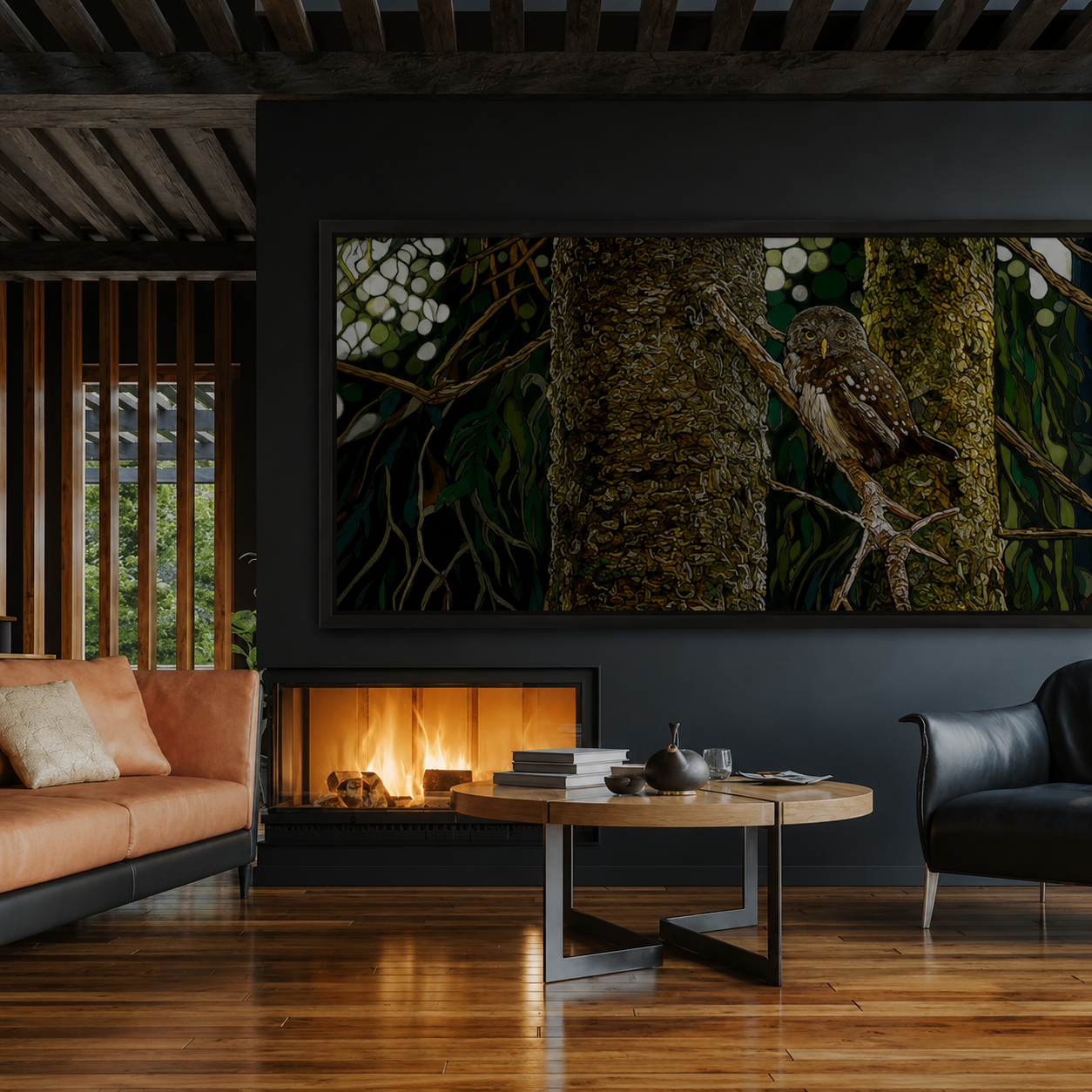
Pour certains collectionneurs, la toile est la façon la plus proche de découvrir l'image lorsque l'original a déjà été vendu ou est hors de leur budget. Elle donne à l'impression une présence plus proche d'une peinture, surtout lorsqu'elle est tendue et exposée sans verre.
Les impressions sur toile sont produites sur une surface de toile d'art et peuvent être tendues à la main sur des châssis solides. Le papier musée et la toile sont les deux catégories d'impression où le processus giclée s'applique le plus directement dans mon travail.
Impressions sur métal brillant
Mes impressions sur métal brillant sont différentes. Ce sont des produits de sublimation thermique de première qualité, je les considère donc comme une catégorie à part entière plutôt que comme le même processus giclée sur papier ou toile.

Pourquoi les éditions limitées sont importantes
L'édition fait partie de la valeur. Mes tirages ne sont pas des reproductions en édition ouverte qui peuvent être produites à l'infini. Selon l'œuvre et le format, ils sont limités à une édition de 100 ou 200 exemplaires. Une fois cette édition complète, elle est complète.
Chaque tirage en édition limitée est accompagné d'un certificat d'authenticité signé, daté et numéroté. Le certificat relie le tirage à l'édition et fournit au collectionneur un enregistrement clair de l'œuvre.
Je pense que cela compte parce qu'un tirage en édition limitée doit être intentionnel. Il ne doit pas ressembler à une copie jetable ou à une décoration produite en série. L'image, les matériaux, le processus et la taille de l'édition agissent tous de concert.
La meilleure façon de l'expliquer est à travers les livres.
Si un auteur écrivait un livre et n'en vendait qu'un seul exemplaire à une seule personne, presque personne d'autre ne pourrait jamais le lire. Il y aurait toujours quelque chose de très spécial dans le manuscrit original ou le premier exemplaire créé, mais cela ne signifie pas qu'une édition signée soigneusement produite n'a aucune valeur.
Une édition signée et limitée peut toujours être significative, collectionnable et précieuse. Les tirages en édition ouverte sont plus proches des livres produits en série qui peuvent être imprimés indéfiniment. Ils peuvent toujours être appréciables, mais ils n'ont pas la même rareté, la même structure ou le même lien avec l'artiste.
C'est plus proche de la façon dont je considère mes tirages en édition limitée. La peinture originale reste unique, mais l'édition limitée permet à plus de personnes de vivre avec l'image tout en maintenant l'édition contrôlée et significative.

Pourquoi je propose des tirages d'art
Les tableaux originaux ne peuvent appartenir qu'à un seul collectionneur. C'est ce qui les rend spéciaux, mais cela signifie aussi qu'une fois qu'un original est vendu, de nombreuses personnes qui se sont connectées à cette œuvre risquent de ne jamais avoir la chance de vivre avec.
Les tirages en édition limitée permettent à l'œuvre d'atteindre plus de personnes sans traiter l'image avec désinvolture. Ils offrent aux collectionneurs un moyen de posséder une version soigneusement réalisée de l'œuvre, produite avec des matériaux sérieux, une attention appropriée aux couleurs et une structure d'édition claire.
J'entends tout le temps des gens qui se connectent à une peinture parce qu'elle leur rappelle un lieu, une saison, un souvenir ou une partie du paysage canadien qui leur est restée. Parfois, l'original est déjà vendu. Parfois, l'original n'a pas la bonne taille ou le bon prix pour eux. Un tirage rend cette connexion possible sous une autre forme.
C'est important pour moi. Je veux que mon travail soit collectionné sérieusement, mais je veux aussi qu'on vive avec. Un tirage en édition limitée bien fait permet aux deux choses de se produire.
La qualité derrière le mot
Le mot giclée peut sonner prestigieux, et dans le bon contexte, il devrait l'être. Mais le mot seul ne suffit pas.
Pour moi, les vraies questions sont simples. L'œuvre d'art originale a-t-elle été capturée professionnellement ? Des encres pigmentaires d'archives ont-elles été utilisées ? Le papier ou la toile a-t-il été choisi avec soin ? L'équipement a-t-il été calibré ? L'édition est-elle limitée ? Y a-t-il un certificat d'authenticité ? La reproduction a-t-elle été réalisée dans le respect de la peinture originale ?
Ce sont les choses qui m'importent.
Lorsque je propose un tirage en édition limitée, je veux qu'il représente la peinture originale avec le plus grand soin possible. La couleur, le contraste, les détails et la sensation de l'œuvre sont tous importants. Il ne s'agit pas seulement de faire une copie d'une image.
Il s'agit de créer une reproduction d'art sérieuse qui peut être collectionnée, exposée et vécue pendant des années.
C'est ce que signifie giclée dans le contexte de mon travail.

Questions courantes sur les tirages giclée
Comment prononce-t-on giclée ?
Giclée se prononce zhee-clay. Vous pouvez également le voir écrit giclee sans l'accent, surtout en ligne. Le mot vient du verbe français gicler, qui fait référence à la façon dont l'encre est appliquée via le processus d'impression.
Une impression giclée est-elle la même chose qu'une affiche ?
Non. Une affiche est généralement produite en série sur du papier standard, souvent en édition ouverte. Une impression giclée est généralement réalisée avec un équipement d'impression professionnel, des encres à base de pigments et du papier ou de la toile d'art. La différence réside dans les matériaux, le processus, la précision des couleurs et la qualité à long terme.
Toutes les impressions d'art sont-elles des impressions giclée ?
Non. « Impression d'art » est un terme générique. Une impression giclée est un type plus spécifique de reproduction d'art, généralement réalisée avec des encres pigmentaires d'archives sur du papier ou de la toile d'art.
Qu'est-ce qui rend une impression giclée archivistique ?
La qualité archivistique provient généralement de la combinaison d'encres à base de pigments, de papier ou de toile d'art sans acide, d'une gestion appropriée des couleurs et d'une production soignée. Dans mon cas, les tirages sur papier musée sont produits sur un papier d'art giclée, et les tirages sur toile sont également produits comme des reproductions d'art utilisant des encres pigmentaires d'archives.
Les tirages en édition limitée sont-ils les mêmes que les tirages en édition ouverte ?
Non. Les tirages en édition ouverte peuvent généralement être produits indéfiniment. Mes tirages en édition limitée sont limités à une taille d'édition définie, généralement 100 ou 200 selon l'œuvre et le format. Chaque tirage est accompagné d'un certificat d'authenticité signé, daté et numéroté.
Les impressions sur métal brillant sont-elles des impressions giclée ?
Non. Mes impressions sur métal brillant sont un produit de sublimation thermique haut de gamme, ce qui est un processus différent de mes impressions giclée sur papier musée et sur toile.
Merci d'avoir lu
Jeff Dillon

©2026 Jeff Dillon Fine Art. Tous droits réservés. Toutes les œuvres d'art, images et textes de ce livre, jeffdillon.ca, ou de toute plateforme affiliée ou non affiliée sont la propriété exclusive de Jeff Dillon Fine Art Inc. et sont entièrement protégés par les lois canadiennes et internationales sur le droit d'auteur. Aucune partie de ce matériel, qu'il soit numérique, imprimé ou autre, ne peut être reproduite, stockée, copiée, capturée par écran, transmise, distribuée, référencée ou utilisée sous quelque forme que ce soit à des fins commerciales, éducatives ou personnelles sans autorisation écrite préalable. Tous les droits créatifs, moraux et de reproduction sont conservés. Les protections de la propriété intellectuelle sont activement appliquées. Jeff Dillon Fine Art et les marques associées peuvent être des marques commerciales ou des marques déposées et ne peuvent être utilisées sans autorisation.